Following on from my previous post where I shared my story on Redesigning Work To Fit Me, I wanted to share some tips and advice I’ve picked up on nurturing the right working environment for autistic people. This will also be useful for others who are neurodivergent!
Why work can be tough for neurodivergent people
Navigating work can be a struggle for everyone, but neurodivergent people often face extra barriers. It’s important to make sure that you are putting your needs first so that you can feel happy at work and naturally this will impact you outside of work too.
Work doesn’t have to be a chore. There are some great ways to make your life easier and if you live in the UK, you are legally entitled to ask for reasonable adjustments to better support you at work, which are changes or accommodations made in the workplace to help neurodivergent employees perform their best.
I know it can be daunting telling your employer about having a neurodivergence but you deserve to feel comfortable and work in a way that suits you.
My experience with overstimulation at work
In-person workplaces can be an overstimulating place. Small talk, masking, unknowns and let’s not forget the noise, lighting and smells. When I used to work in an office full-time, undiagnosed, looking back I can see that my autistic traits were clear even then.
I would sit for most of the day with my sunglasses on, regularly press my fingers into my ears to block out noise, force down loads of water so I could regularly take bathroom breaks and I’d appear like a statue, afraid to move because I was masking so intensely. Does any of this sound familiar?
Working full-time was too much for me. I was overstimulated and burnt out constantly. I need the additional days off to reset and feel myself again.
I prefer working from home. I find it so hard to concentrate in an office when there are so many distractions and stimuli. At home I feel comfortable and safe.
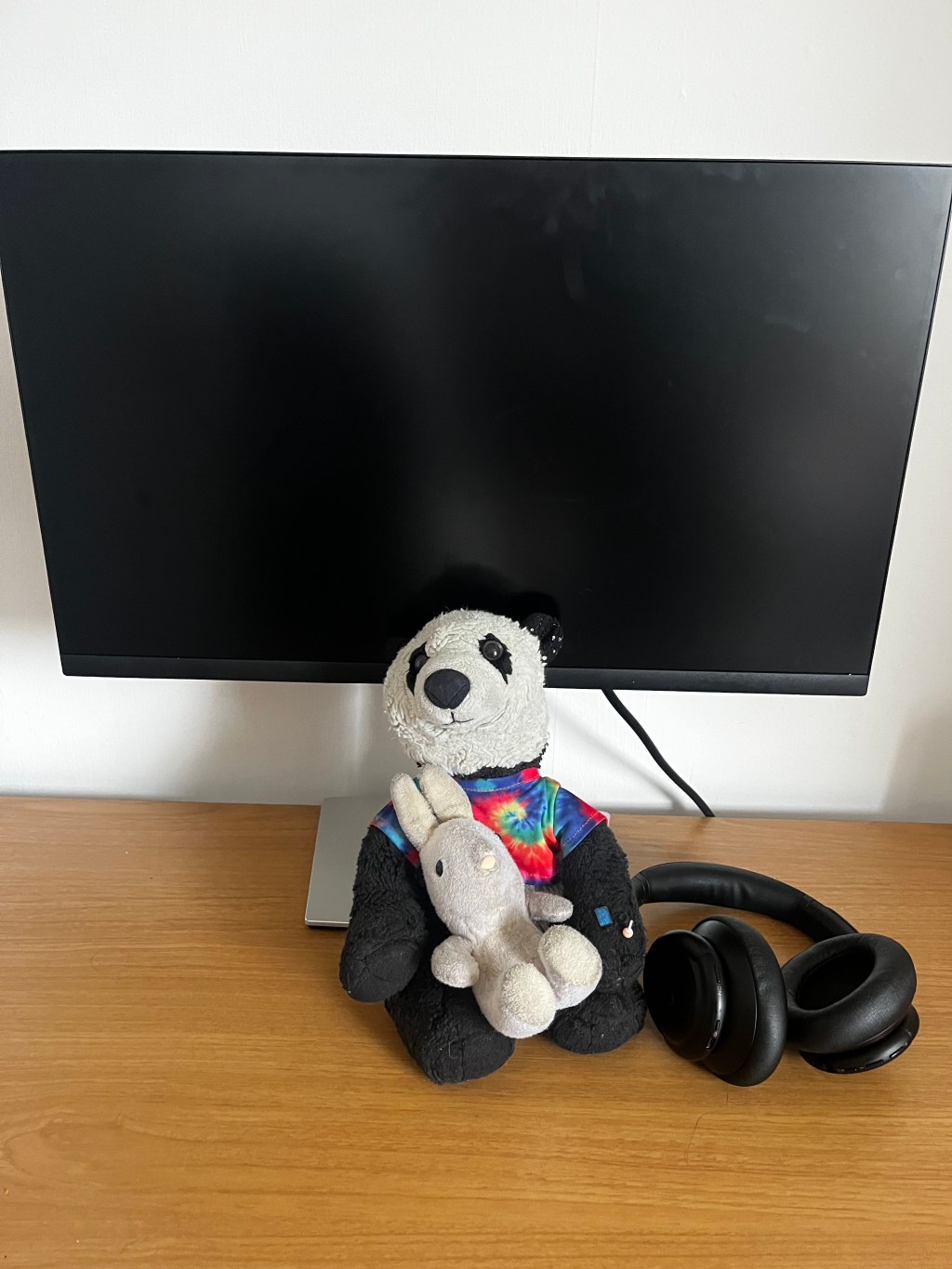
I can sit with my cuddly toys all day, take breaks when I need them (and my full lunch break) without feeling judged.
I can put my amazing hyperfocusing skills to good use without interruption and control the level of stimuli around me. For example, I often sit with my curtains drawn all day to reduce overstimulation from the light outside.
Having said that, I do love human interaction and like the fact that in my new role, I meet up with my manager or colleagues once every couple of weeks. That works perfectly for me.
Talking to your employer about autism
If you feel brave enough to speak with your employer, I’d highly recommend it. Before I told my manager about having autism, I felt like I was hiding my true self and it just didn’t feel right.
Afterwards I had a big weight lifted off of my shoulders and it allowed me to start unmasking at work. But remember, disclosure is a personal choice.
If you do decide to speak with your employer, I suggest having a think about your strengths and challenges when you are at work before you chat to them.
Write two columns on a piece of paper and start mapping them out over a few weeks or a month. The more you think about it and are prepared, the more that you will be able to explain what you need at work.
Your employer might not know what to do. They might be totally new to the neurodivergent world. If they are, you can help by explaining things clearly to them if you have prepared in advance. And if you are autistic, everyone knows we all love a good plan!
They might need to speak with HR or do some research themselves. Be patient and understanding of this.
Examples of reasonable adjustments
Here are just a few examples of reasonable adjustments that you can request as a neurodivergent person:
- Changing your job role– they might not be able to change it right away but if you’ve spoken about it, you’ll be first in line if a better suited role becomes available.
- More time working from home.
- Changing your working hours– this could be start time or finish time, or reducing hours per week for example.
- Software that works better for you– could be mind mapping software (to see things in a more visual context), text to speech software (if you struggle with reading text and prefer audio), spelling and grammar software etc.
- Having meetings in a quieter location or moving your desk to a different location.
- Asking for a work mentor or buddy to support you in areas or tasks that cause you the most anxiety at work.
- Requesting clear and concise communication.
Although you can request reasonable adjustments, it doesn’t mean that your employer will agree to all of them. It depends on a variety of factors and whether they can reasonably agree with them.
For example, if you are requesting to work from home more but your employer needs people on-site for the type of work that you do, it’s unlikely that they will be able to grant that request.
Tips for managing without disclosure
You may not feel comfortable speaking with your employer and that’s ok too. There are a few things that you could try without disclosing anything:
- Setting boundaries can make a huge difference. Know what works for you, and don’t feel pressured to conform just because others do. For example, if you find yourself consistently working overtime, try to stick to your contracted hours. If the work piles up then that will actually show your employer that they might need more resources.
- Take your lunch break. In the UK you are legally entitled to one, so use it. It can massively help with overstimulation and help prevent burnout.
- Utilise your lunch break with calming activities that work for you. I love doing yoga on my lunch break and really notice the effect on my body and mind when I don’t do it.
- If noise is a big issue, use noise cancelling headphones or earplugs, if you have them. You could also try to change your desk or working location to somewhere a little quieter if possible.
- If you need constant sound in the background when you are working, try putting on a podcast or some music.
- If you don’t like the method used to communicate with your line manager or colleagues, you could try to change this. For example, I can get very confused with big blocks of text on chat or in an email. If I’m not sure about something I request a call or short meeting for clarity.
- If light is too bright- try adjusting your screen brightness or enabling dark mode if you use a computer.
- Research different types of software that might help with specific issues. Many free or low cost tools exist. I really like Asana for organising my day and Miro for mapping things out that get stuck in my brain, in a more visual way.
- Use a stimming object to help you focus. Things like a stress ball are so common, everyone uses them, it wouldn’t imply you were neurodivergent by using one.
There are many more possibilities, and once you know specifically what your needs are, it’ll be easier to narrow what might work.
Further resources
I’ve included some links below for further reading that might be helpful. Some of them are geared towards companies, but I find it’s useful reading from an employer’s perspective too.
How do you navigate the workplace? I’d love to hear from you. Each of us have unique needs and work in a different setting. I can imagine you might have some amazing suggestions that I haven’t even thought of.
Much love,
Rachael xx
Peeling back each layer takes time and energy. If you’d like to support The Invisible Onion and help keep the onion blooming, please donate through this link.
Useful links:
- What are reasonable adjustments and when can they be requested?– National Autistic Society.
- Reasonable adjustments for neurodiversity– acas
- Making your workplace more autistic friendly– Mind
- Managing change– Employment Autism
- Reddit has loads of great advice from fellow neurodivergent people! Do some searching for what you are specifically looking for.



Leave a comment