
My Grandad recently passed away. As I’ve been navigating this experience, I’ve felt a strong need to share some things I’ve learned about autistic grief, along with coping strategies and how I’ve been putting into practice the process of understanding my emotions.
As an autistic person, I’ve noticed that my experience of grief can feel more intense, overwhelming, and physically present than I expected.
Grieving As An Autistic Person
Grief is difficult for anyone, but it can feel especially intense when you’re autistic. I’ve always experienced emotions very deeply and quickly form deep emotional attachments.
This is true of friends and family but I can also get attached to people that I’ve never met, like celebrities I resonate with. If someone passes away, I still go through the grieving process.
For example, I adored this little cat who had some life impairing disabilities called Lil Bub. I followed her on Instagram and was so excited every time she had a new post. I felt like I knew her. She had a shorter than normal life expectancy and when she passed away I was overwhelmed with grief.
So when someone close to me passes away, the grief hits intensely.
Losing My Grandad
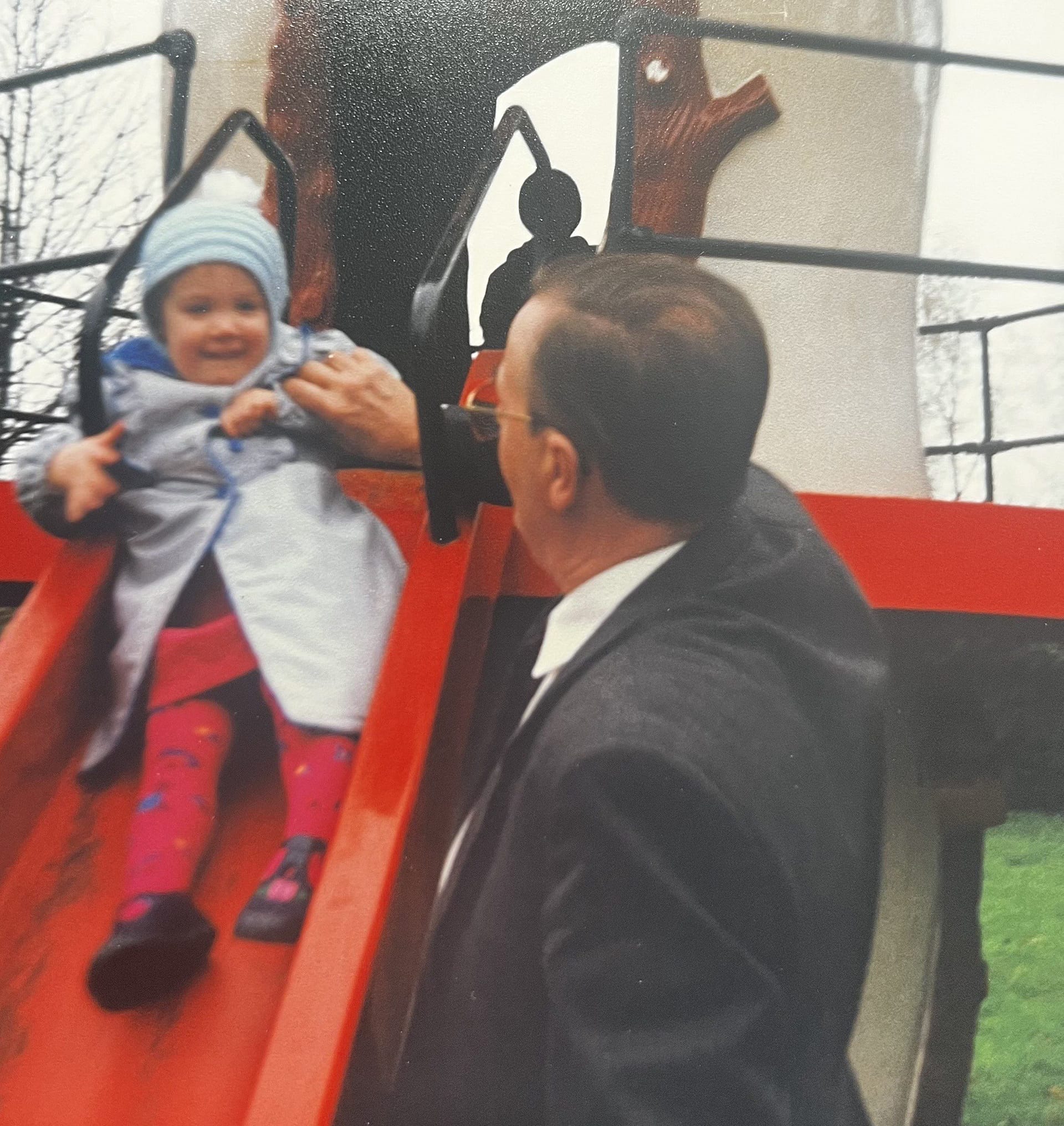
My Grandad was an inspirational force to me. He was always looking at ways for self-betterment and had a holistic approach to life. He would jump on anything new and embrace it. Like being one of the first people I knew to use the internet.
Here’s a photo of me with my Grandad from when I was little. A moment I’ll always treasure.
Putting Therapy Into Practice
When I first found out the news that he had passed, I was naturally upset and my brain felt jumbled. Luckily I was able to take the day off of work.
I instinctively turned to self-care through gentle yoga and meditation.
During my yoga and meditation sessions, I followed the steps to understanding my emotions that I’ve learnt from therapy: slowing down, noticing, allowing, feeling, embracing and creating space.
A key takeaway here was allowing myself to truly feel those intense emotions. Every time that I have experienced grief in the past, I have fought hard against my emotions, not giving them the space to sit there and breathe. I’d get frustrated and shove them deep down, not to be processed. Suppressing emotions has caused me to hold onto a lot of painful feelings for years.
Over time, I’ve also been learning how to gently notice what’s happening in my body when big emotions arise. I share more about this in my post on somatic tracking and nervous system regulation.
Learning To Ride The Emotional Waves
On my second day of grieving, I noticed that I felt lighter than I had the previous day. Still with heightened emotions but able to cope better.
When I woke up on day three, I was surprised that I felt absolutely awful. I felt so depressed that I struggled to get out of bed, let alone complete daily tasks. It made me feel frustrated. I thought I’d made progress. Why did I feel like I was backsliding?
As the day wore on and I was reflecting, I came to the realisation that allowing myself to feel depressed was also ok. Those feelings were valid and it was just the next step in my grieving process. I understood that I would have my ups and downs as I navigated my grief and I had to ride the wave. I needed to listen to my intuition and roll with how I was feeling each day.
After this realisation, I did just that, and continued to allow my body to go through the motions. I practised kind self-talk and gave myself the love I deserved.
Unmasking Through Grief
Along the way, I’ve learnt not to compare my experience of grief with other people’s. In the past, I have looked at others and been confused why they are able to be much stronger than me. I’ve got upset at myself for being so sensitive and ended up burying my emotions so that I appear normal in other people’s eyes.
The masking process has done me no favours. It has accumulated a buildup of unprocessed pain that has constantly been lurking under the surface, able to burst out at any moment unawares.
Recognising that this time, I’ve done things differently. As part of my conscious effort to unmask (and this isn’t easy), and through allowing and embracing my emotions, I’ve learnt that each person processes their grief differently. I need to stay true to myself.
The Power Of Comfort And Connection
Self-love and self-kindness have been invaluable for me during the grieving process. Taking time for small comforts and shifting my internal self-talk have helped.
In spite of this, I wanted to touch on the importance of connections with others. Sharing your story with a loved one can be a powerful way to heal. I spoke with my husband and closest friends as soon as I got the news. I knew they’d listen and show me the support that I needed.
And let’s not forget cuddles! Everyone needs a hug when they are feeling rubbish. Their power can be game changing. If you don’t have a person to hug, there are still some great options out there.
I love cuddling my favourite soft toys. They’re always there for me, never judging. Pets can have the same effect. I also love a tree hug. Don’t discount it until you have tried it! Nature can be very healing.
If none of those options are available to you then a pillow can be comforting. Or even wrapping your arms around yourself and giving yourself a big hug.
Setting Boundaries Whilst Grieving
Setting clear boundaries with people has always been a struggle for me. I think this is partly because of the fact that I mask a lot. I want to be able to fit in, so I do what I think other people want of me, rather than staying true to myself.
On previous occasions of grieving, I have put others’ needs before my own, causing me to give all my energy to others and disregarding my own needs. The consequences left me completely drained, leading to burnout.
Through my journey of peeling back my layers, I am aware that burnout is a significant risk for me in many situations and I am trying to understand my triggers better.
Because of this awareness, I am actively trying to set clear boundaries with people. It tied in nicely to my grieving process. Allowing me to focus on myself first, so that I could support others too.
My Autistic Grief Toolkit
My grieving process isn’t over yet, but I am feeling better equipped than I have been previously to navigate it. Making a few small changes tailored to my autism has been helpful.
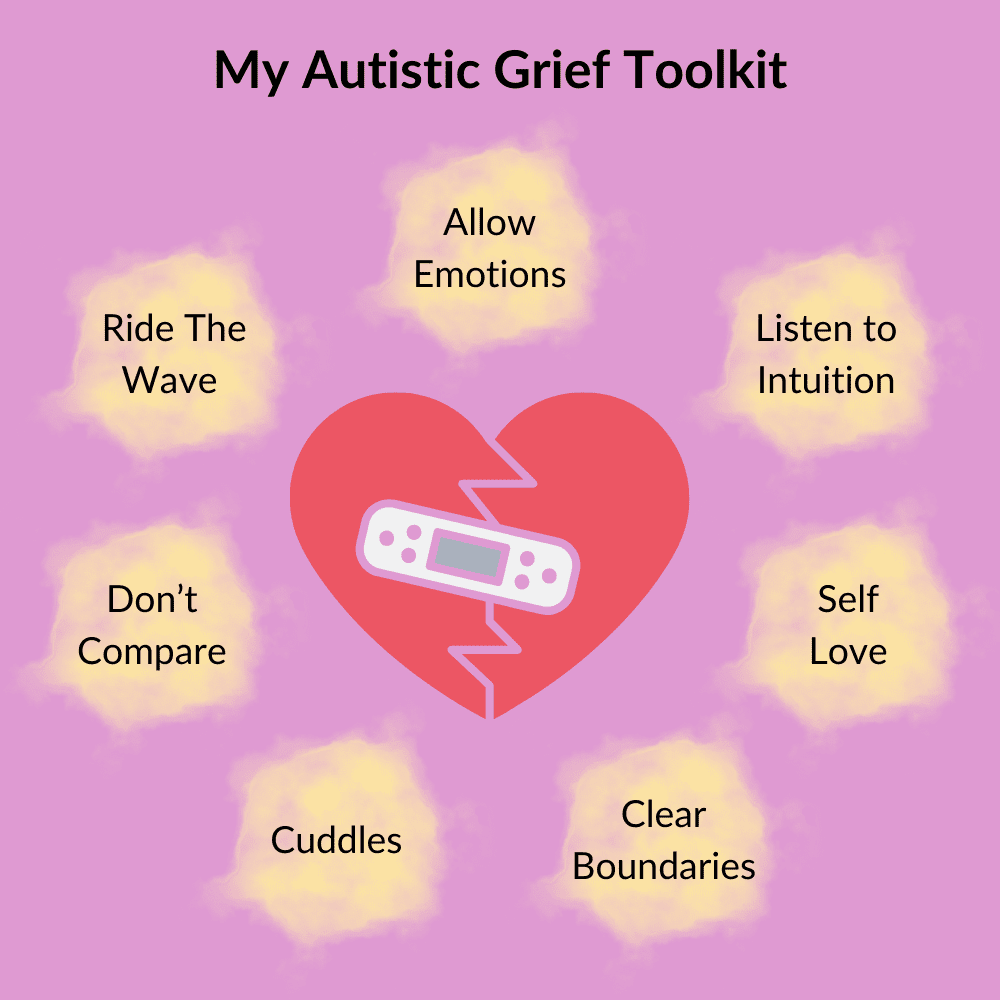
Here are the tools that have helped me the most:
- Allow yourself to feel your emotions – don’t ignore them, they are there to help you through the process.
- Ride the wave – no two days will be the same and don’t get frustrated if you take a few steps forwards followed by a few steps back.
- Listen to your intuition – do what feels right at the time through each step in your process.
- Don’t compare yourself to other people – you are unique and amazing. It doesn’t matter if someone else experiences grief in a different way to you.
- Practice self love – do things that help you in the moment with self-healing in mind.
- Get some cuddles – whether that’s with a partner, relative or friend, a cuddly toy, a pet, a tree, a pillow or yourself!
- Set clear boundaries – put yourself first and it will make it easier to support others.
I’d love to hear your reflections on this topic. What has helped you through grief? Please feel free to share in the comments, or just take what you need from this post and know you’re not alone.
If This Resonated, You Might Also Like
If you’re navigating grief as an autistic person, these posts explore emotions, healing, and understanding yourself more deeply.
- Getting to Know My Whole Self: A Journey of Healing and Growth
- How Therapy Helped Me Understand My Emotions as an Autistic Adult
- The Next Layer: Moving from Survival to Safety
Peeling back each layer takes time and energy. If you’d like to support The Invisible Onion and help keep the onion blooming, please donate through this link.
Much love,
Rachael xx


Leave a Reply